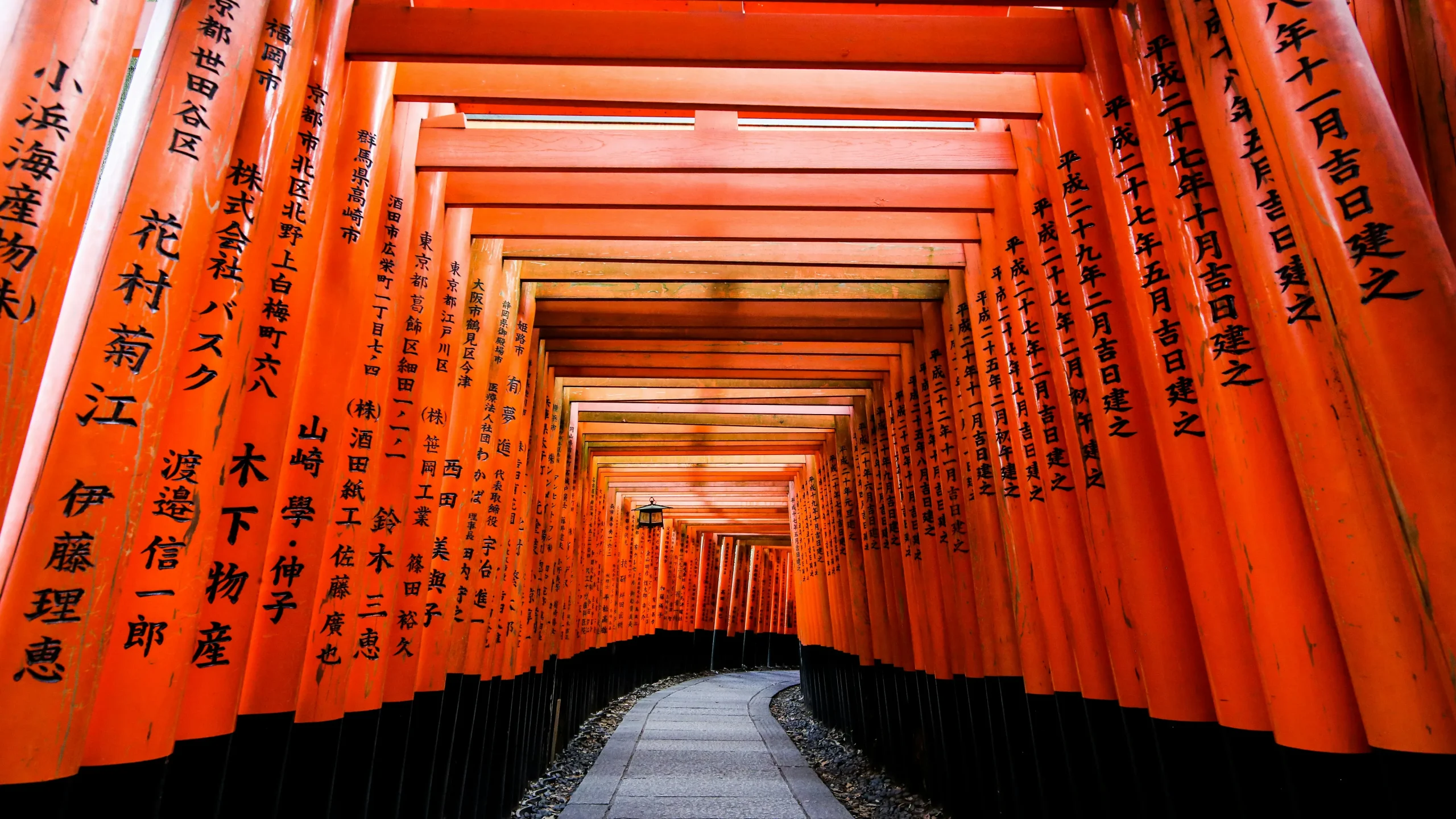
Fushimi Inari Taisha’s tunnel of red torii gates is one of the most recognizable images of Japan, and it’s easy to see why it tops so many “best of Kyoto” lists. But the famous photo spot is really just the entrance to something much bigger — a full mountain, covered in roughly 10,000 gates, that most visitors never actually explore.
The vast majority of tourists walk the first photogenic stretch, reach a scenic overlook partway up, and head back down. The full route to the summit and back is a genuine hike — a few hours round trip — and it thins out dramatically the higher you go, revealing a completely different side of the shrine that has almost nothing to do with the crowds below.
That upper section is where the shrine’s actual devotional culture lives, with small private shrines still being dedicated by individuals and businesses today, exactly as they have been for well over a century.
Want to know exactly where the crowds thin out, how much it costs to dedicate your own torii gate, and what’s actually worth seeing on the full mountain route? Read the complete guide on [ Medium → ]
Recommended gear for this:
a lightweight daypack with water bottle holder
a portable folding fan (the climb gets warm year-round)
This post contains Amazon affiliate links. If you purchase through them, I may earn a small commission at no extra cost to you.

Comments