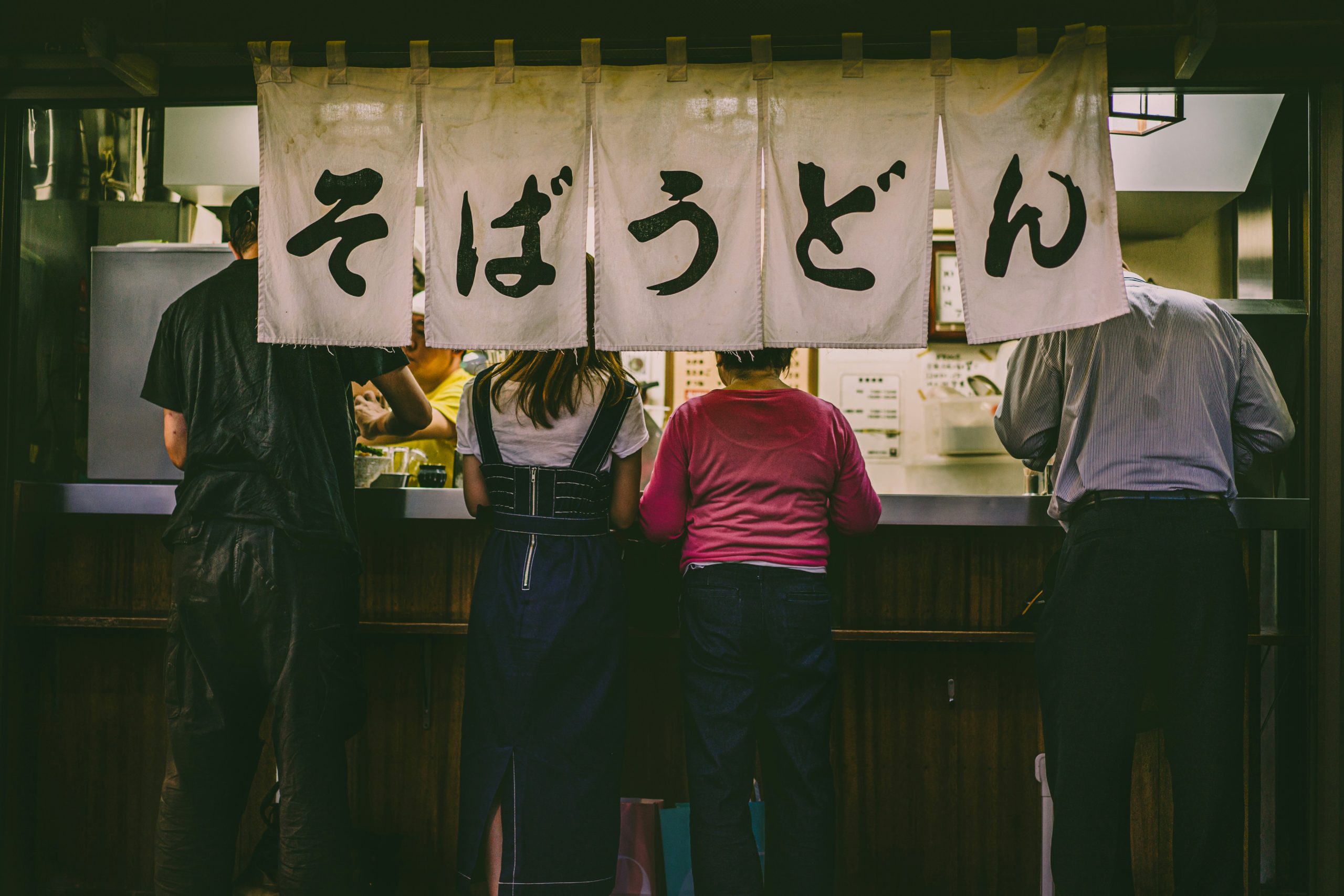
What tourists do: stick to restaurants with English menus and photos, and walk right past the small, standing-only noodle counters that locals treat as a daily fast-food staple.
What locals do: grab a fast, inexpensive bowl of soba at a tachigui soba shop (立ち食いそば, “stand and eat soba”) — a Japanese fast-food format built around small counters, often eaten in under ten minutes.
Chains like Fuji Soba and Yudetaro are the easiest way in — some locations even offer English signage or take credit cards. The system is simple in outline: buy a ticket from a vending machine before you sit or order, then either hand it to the counter staff directly or wait for your ticket number to be called (usually in Japanese only, so it helps to stay within earshot of the counter).
Independent, local tachigui shops are a bigger step up in difficulty — less English, often cash-only — but Japanese hospitality tends to carry first-timers through just fine.
The menu itself is the real hurdle for most visitors: dozens of topping combinations (fried tofu, tempura, grated radish, raw egg, and more), plus a choice between hot broth and two distinct styles of cold soba — one of which involves a separate dipping sauce and a traditional closing ritual using the noodles’ boiling water.
⚠️ If you have a buckwheat allergy: soba and udon are often boiled in the same pot at these shops — always ask before ordering, even for udon.
Tachigui soba — standing soba shops — are where Japanese office workers grab a fast, cheap, satisfying meal between trains. There’s a specific system: buy a ticket from a machine, hand it to staff, eat standing up, and you’re out in under 10 minutes. Tourists almost never step inside one.
Want the exact ordering process, ticket machine walkthrough, and etiquette tips? Read the complete guide on Medium →
Recommended gear for this:
This post contains Amazon affiliate links. If you purchase through them, I may earn a small commission at no extra cost to you.
Comments