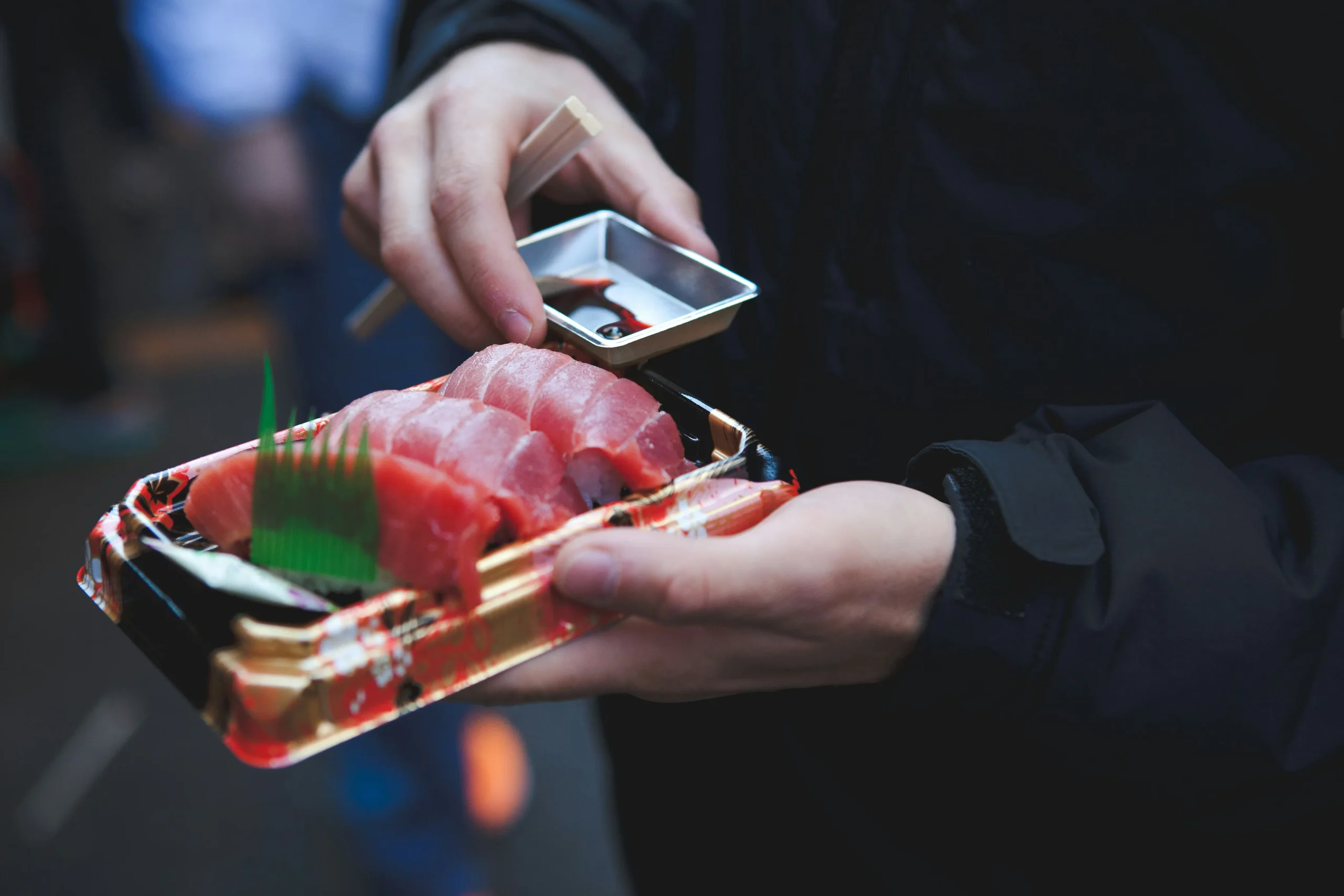
If you’ve heard of “depachika” — the elaborate basement food halls under Japan’s department stores — you’ve probably seen the photos: glossy fruit towers, gift-wrapped melons, immaculate sushi counters. It’s a real spectacle, and worth seeing. But there’s a whole second life to these places that most visitors never encounter, because it only happens in the last hour or two before closing.
Regular shoppers, particularly working parents and older residents, treat the evening hours as a completely different event from the daytime browsing experience. Staff begin marking down unsold prepared food in stages as closing time approaches, and the pace and intensity pick up the closer you get to the final bell. It’s a quiet but surprisingly competitive scene — nobody’s shouting, but nobody’s holding back either.
Most tourists visit depachika in the early afternoon, when everything looks its best and costs full price, and that’s a perfectly reasonable way to experience the visual spectacle of it. But the version locals actually rely on for their weekly shopping runs on a completely different clock.
Want the exact discount timeline, which counters mark down and which never do, and real price examples from the evening rush? Read the complete guide on [ Medium → ]
Recommended gear for this:
Insulated lunch tote bag
foldable reusable shopping tote
This post contains Amazon affiliate links. If you purchase through them, I may earn a small commission at no extra cost to you.
Comments