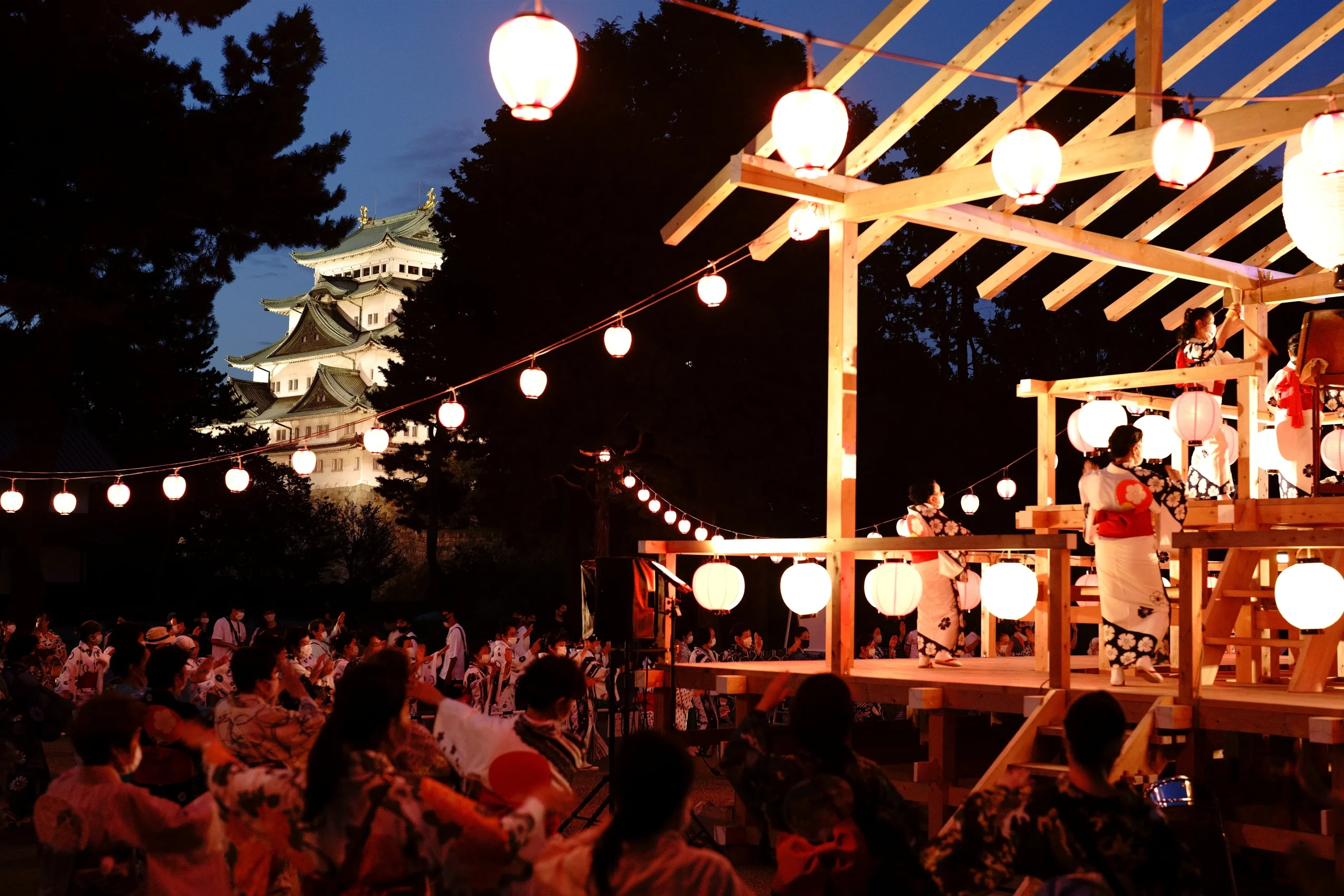
Every summer, neighborhoods all over Japan set up a wooden tower in a park or school playground, hang it with paper lanterns, and dance around it in a giant circle. This is bon odori, the dance of the Obon season, when the spirits of ancestors are believed to return home. It is one of the most widespread traditions in the country, and one of the easiest to take part in.
The dance has a surprisingly dramatic history. It grew out of Buddhist “dancing prayer” centuries ago and became the biggest party of the year in Edo-era villages. The Meiji government later banned it as immoral, but it came roaring back as a pop phenomenon in 1930s Tokyo. In 2022, dozens of Japan’s folk dances, including famous bon odori, were added to UNESCO’s Intangible Cultural Heritage list.
Most visitors only experience bon odori as spectators at big-name festivals. Locals, on the other hand, simply walk to their neighborhood event and join the circle. These local versions rarely appear in English guides, but they are free, friendly, and open to anyone willing to copy the person in front of them.
Want the history behind the Meiji-era ban, the story of Japan’s three great bon odori, and exactly how to find and join a local dance? Read the complete guide on Medium → [Medium link]
Recommended gear for this:
- A men’s or women’s cotton yukata set (with obi)
- Traditional wooden geta sandals
- A Japanese uchiwa paper fan
This post contains Amazon affiliate links. If you purchase through them, I may earn a small commission at no extra cost to you.

Comments